
Tuning Fork Reflexology London: Honest Evidence
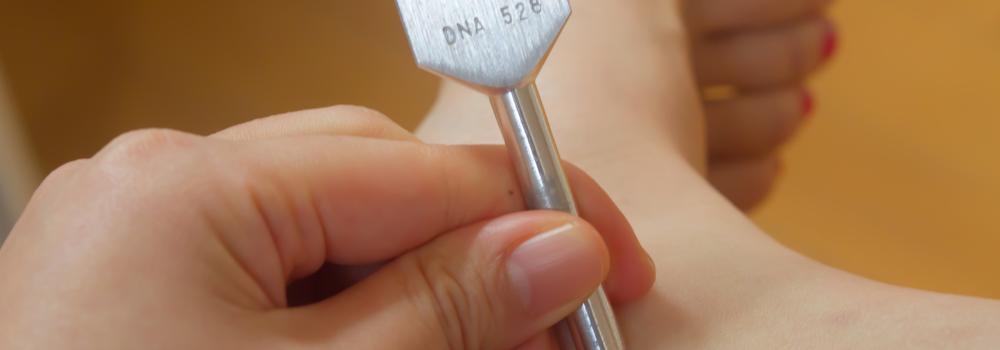
Reflexology’s own evidence base is weak. Tuning fork/vibroacoustic work is better supported. Here’s what that means for a combined session, honestly. Tuning Fork Reflexology in London — What It Is, and an Honest Look at the Evidence for Each Half Tuning fork reflexology is genuinely rare in London — a handful of practitioners nationally offer it as a named, combined service, most reflexologists who use tuning forks at all treat them as a minor add-on rather than a structured part of the session. Before describing what it involves, it’s worth being direct about something most pages offering this treatment don’t say: the two halves of “tuning fork reflexology” don’t have the same evidence behind them, and pretending otherwise doesn’t serve anyone deciding whether to book. What Tuning Fork Reflexology Actually Is Tuning fork reflexology applies chakra-tuned forks directly to reflex points on the feet — the same point map used in standard reflexology, where specific zones are mapped to organs, glands, and nerve pathways throughout the body. Rather than manual pressure alone, a struck tuning fork is placed against these points, and the vibration transmits through the bone structure of the foot — a technique sometimes called osteophonic or bone-conduction application, distinct from simply holding a fork near the skin. The session typically closes with gentle hands-on energy work across the feet for grounding. What the Evidence Actually Supports — And What It Doesn’t Here’s the honest split. Reflexology on its own has a weak evidence base. Systematic reviews of randomised controlled trials have consistently found that the best available clinical evidence does not convincingly demonstrate reflexology as an effective treatment for any specific medical condition — across one well-known review, five trials showed positive effects, twelve found no evidence of effectiveness, and overall trial quality was rated poor. That’s not a fringe opinion; it’s the standard finding across multiple systematic reviews of reflexology’s core therapeutic claims. The tuning fork and vibroacoustic component sits on firmer ground. Vibratory stimulation reliably increases local blood flow, reduces muscular tension, and activates the parasympathetic nervous system — the branch responsible for rest and recovery — and these are well-documented physiological responses in the broader vibroacoustic research literature, not claims specific to reflexology. A 2016 study in the Journal of Evidence-Based Integrative Medicine found that sound meditation using tuning forks and singing bowls significantly reduced tension, anger, fatigue, and depressed mood in participants. A 2015 study in Pain Research and Management found low-frequency sound could reduce chronic pain specifically in fibromyalgia patients. So the honest position is this: the vibrational, nervous-system half of tuning fork reflexology has real, if still developing, physiological grounding. The reflexology point-mapping half — the idea that a specific spot on the foot corresponds to and can treat a specific organ — does not currently have convincing clinical trial support behind it, regardless of how the point is stimulated. A session may well produce real relaxation and real physiological effects through vibration and touch; that’s different from the point-specific organ-correspondence claim being proven, and it’s worth knowing which claim you’re actually getting evidence for. Why Feet, Specifically Bone conduction is more efficient in areas with less soft tissue between the fork and the skeletal structure, which is part of the practical reasoning for applying forks at the feet rather than more heavily muscled areas of the body. The reflex point density on the sole also means a practitioner can move through a structured sequence of contact points in a single session, rather than working a smaller number of broader areas. What This Looks Like at Shin Healing Shin Healing’s Tuning Fork Reflexology session runs 60 minutes at £85, held in Hammersmith, London W6. Chakra-tuned forks are applied directly to reflex points on the feet, followed by gentle hands-on energy work for grounding and stress relief. This is offered as a complementary relaxation and nervous-system-regulation practice — not as a diagnosed treatment for a specific medical condition, and not in place of conventional care for one. To book, or to ask whether this is the right session for what you’re dealing with: shinhealing.com
What Is Immersive Healing? Reiki + Sound Combined
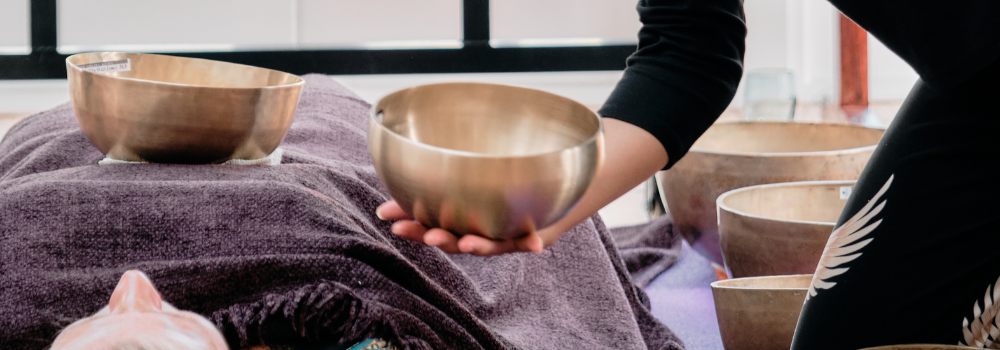
No trial has tested Reiki and sound healing combined — only each alone. Here’s the real theory behind Immersive Healing, and what a session involves. What Is Immersive Healing? Reiki and Sound Healing Combined — and What’s Actually Proven About It Search for Reiki combined with sound healing and you’ll find the same phrase everywhere: powerful alchemy. Two ancient healing arts, brought together, for a deeper, more profound experience. It sounds compelling. It’s also a claim nobody backing it has actually tested. Here’s what’s true: no clinical trial has ever studied a combined Reiki and sound healing session. Not one. Every “Reiki-infused sound bath” description online — the profound synergy, the deeper release, the enhanced results — is inference, not evidence. That doesn’t mean the combination doesn’t work. It means the marketing has gotten ahead of the research, and it’s worth knowing exactly where the line between the two sits before booking a 90-minute session on the strength of a word like “alchemy.” What’s Actually Been Studied — And What Hasn’t Reiki alone has real evidence behind it: a 2024 meta-analysis of 824 participants found a statistically significant reduction in anxiety. Sound healing alone has real evidence too: a 2025 systematic review of 19 clinical studies, nine of them randomized controlled trials, found consistent improvements in anxiety, mood, sleep, and in some cases pain and cognitive function. Both of those are genuine findings, with real citations behind them, covered in depth elsewhere. What doesn’t exist is a study of the two together. Combining them is a reasonable idea, not a demonstrated one. Researchers reviewing this space have been explicit about this: studies on Reiki and studies on sound healing measure different things, in different populations, with different methods — and extrapolating from either one to what happens when you combine them requires real caution, not a marketing tagline. The Actual Theory Behind Combining Them There is a genuine theoretical framework here, and it’s more specific than “powerful alchemy” — it’s just rarely named. Researchers Miles and True proposed that Reiki and sound healing may work through a shared underlying mechanism: vibrational attuning of the body’s biofield. The idea is that both practices, despite using entirely different delivery methods — hands versus instruments — may be nudging the same underlying system toward coherence. If that’s correct, sequencing the two rather than picking one might, in theory, work on the same target through two different channels rather than duplicating the same effect twice. That’s a coherent hypothesis. It is still a hypothesis. Nobody has run the trial that would confirm or rule it out. Anyone offering a combined session — including this one — is operating on informed judgment about how the two modalities might interact, not on a settled finding. What Actually Happens in an Immersive Healing Session At Shin Healing, Immersive Healing is the specific, named protocol built around this open question, not a generic label. A session runs 90 minutes. Reiki is applied first, hands-on, for up to 60 minutes — the rationale being that opening and clearing the energy field before the sound work begins gives the second half of the session more to work with, rather than starting cold. Tibetan singing bowls follow, placed on and around the body, working at the tissue and biofield level once the first layer has already been addressed. The sequencing is deliberate: Reiki first because it’s the gentler, slower entry point; sound second because it’s more intense and benefits from a nervous system that’s already begun to settle. One client, Joe S.C., a Business Intelligence Advisor, described exactly this sequence in a home-visit session: “During the Reiki, the warm and positive energy that Julia emits felt like it was being concentrated on the various parts of the body she worked on. I was so relaxed I may have even drifted off at one point. The sound healing was an experience like none other; the Tibetan singing bowls created deep vibrations that radiated through my body and frequencies that induced euphoric feelings.” The effect, in his account, didn’t stop at the session: “the following day felt light and easy… I also felt less overwhelmed by the tasks that had previously felt insurmountable.” That two-phase account — a settling first half, a more intense second half, and an effect that carried into the next day — is a real, individual data point for what the Miles and True hypothesis would predict, without claiming it proves the mechanism. Who This Is For — Honestly Immersive Healing is the practical answer for two kinds of people: those who don’t want to choose between Reiki and sound healing because their situation doesn’t cleanly call for one over the other, and those who are already familiar with one modality and curious what the other adds. It is not a “stronger” or “more powerful” version of either — that framing, common in competitor marketing, implies a proven multiplier effect that doesn’t currently have evidence behind it. What it is: a considered combination of two independently-evidenced practices, sequenced by a practitioner’s clinical judgment, offered honestly as exactly that. Booking Immersive Healing runs 90 minutes at £155 in-studio, or £250 for a home visit across London, Surrey, and Berkshire. Sessions are held at Hammersmith, London W6, with Julia Shin-Yan Tsang — a Usui Reiki Master Teacher and CMA-accredited sound therapist trained at source in Nepal and Bali, UK. Allow up to two hours in total. To book, or to ask whether this is the right starting point for your situation: [shinhealing.com]