
Reiki for Grief & Burnout in London
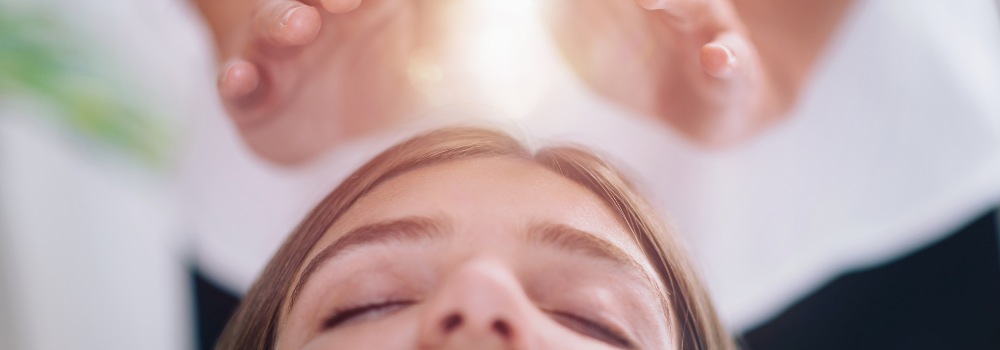
Reiki sessions for grief, burnout, and major life transitions in London work differently depending on what you’re carrying in — what actually happens, condition by condition. Reiki for Grief, Burnout, and Life Transitions in London — What a Session Actually Addresses This is Part 2 of a two-part guide to what a Reiki session actually addresses, condition by condition. Part 1 covers the evidence on Reiki and anxiety, plus what a session for anxiety and overwhelm looks like: read it here — Reiki for Anxiety and Overwhelm in London. This part covers grief, burnout, and life transitions, and what happens when a session goes further than expected. Grief Grief behaves differently, and treating it like anxiety in a session misses the point of the work. Grief that hasn’t been let through often doesn’t present as sadness at first — it can show up as tightness in the chest, a held breath, or a strange flatness that the client can’t quite name. A session doesn’t try to move grief along faster than it’s ready to move. It creates enough safety and stillness that whatever has been held gets permission to surface — which is why grief sessions are the ones most likely to produce sudden, unplanned emotional release: tears that weren’t expected, a wave that passes through and then genuinely clears. This is not a malfunction of the session. It’s usually the point. A practitioner who has sat with this regularly recognises the difference between release and distress, and knows when to hold space and when to slow down — which is a skill built by repetition with real grief, not by training level alone. Burnout and Emotional Numbness Burnout is the condition most often misdiagnosed as needing the same approach as anxiety, and it’s usually the opposite. Where anxiety is a nervous system stuck in “on,” burnout is frequently a nervous system that has gone quiet from overuse — flat, low-charge, disconnected from sensation rather than flooded by it. A session for burnout tends to work more slowly and with less intensity at the start, because the goal isn’t to calm an activated system but to gently bring feeling back into one that’s gone numb from sustained overextension. Clients in this state often describe the most meaningful part of the session as simply noticing something again — hunger, tiredness, a specific emotion — rather than a dramatic release. Burnout sessions are also the ones where a single visit is least likely to be enough on its own; the nervous system depletion that produces burnout usually didn’t happen in a week, and it doesn’t fully resolve in one. Life Transition and Disconnection This category — divorce, career change, a major move, the end of a long chapter — doesn’t map neatly onto anxiety or grief, though it can contain elements of both. What’s distinct here is a client who is often not distressed in an obvious way but reports feeling ungrounded, unclear, or disconnected from a sense of direction. Sessions for this tend to focus less on calming a specific symptom and more on creating clarity — space where the next right step becomes more legible, even if nothing about the external situation has changed yet. One Shin Healing client, receiving a distant Reiki session during a period of uncertainty, described consistent warm sensations over the heart throughout the session, followed by a distinct sense of emotional clarity in the days afterward. This is the presentation where clients most often describe the outcome in cognitive terms rather than physical ones: less “I feel calmer” and more “I know what I need to do now.” When It Goes Further Than Expected Occasionally, in any of the above, a session produces something more intense than relaxation — visible shaking, a strong and unexpected emotional surge, or a client who goes still enough to seem briefly somewhere else entirely. This isn’t unique to any one condition; it happens when the body has been holding something for long enough that safety alone is enough to let it go. What matters at that point isn’t the client’s readiness — it’s whether the practitioner has actually sat with this before and has a steady, specific response rather than a reassuring one. Years of regularly sitting with clients through exactly this kind of response is what builds that steadiness — a different kind of readiness than a weekend qualification provides, and it’s worth asking any practitioner directly what they do when a session goes further than expected. A confident, specific answer is the tell. What Reiki Doesn’t Do It doesn’t replace treatment for a diagnosed anxiety disorder, and it isn’t evidenced for conditions like psychosis or severe depression — the research base simply doesn’t extend there, and no honest practitioner should imply otherwise. It’s also not a single-session fix for anything chronic; the evidence supports it as a complementary practice that reduces symptom load, not a cure that resolves the underlying condition. If what you’re carrying feels acute, unmanageable, or unsafe, a Reiki session is a reasonable addition to care from a GP or therapist — not a substitute for booking one. What This Looks Like at Shin Healing Julia Shin-Yan Tsang holds the full three-level Usui Reiki system, trained across three teachers — Reiki Maya London, Jacqualine Hannah, and Teresa S. Brown-Okunniwa. Sessions begin with a consultation and energetic assessment, so the approach reflects which of the above you’re actually bringing in, rather than a single fixed protocol applied to everyone. Acute grief or major transition usually calls for a short intensive period followed by a lighter maintenance schedule. In-person sessions run from Hammersmith, London W6; distant Reiki is available any day by arrangement. To book or ask which approach fits your situation: shinhealing.com
Reiki for Anxiety & Overwhelm in London
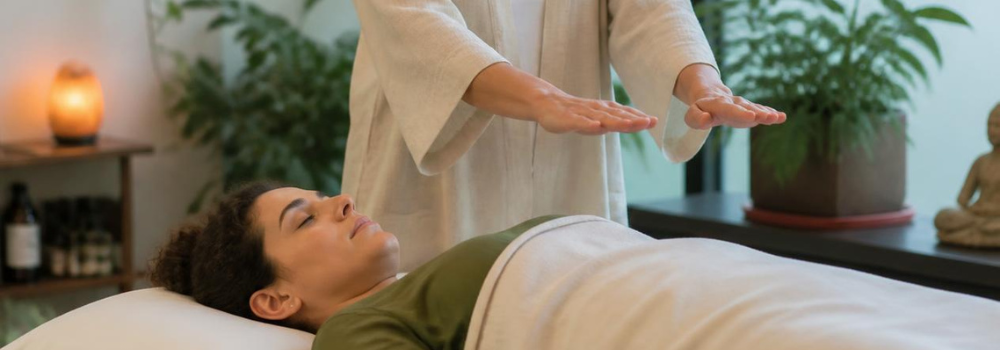
Reiki for anxiety in London shows a moderate-to-large reduction in symptoms per a 2024 meta-analysis of 824 people — but what a session addresses differs by condition. Reiki for Anxiety and Overwhelm in London — What a Session Actually Addresses Every Reiki practice in London says the same four words: “restores emotional balance.” Ask what that means for someone having a panic spiral at 2am, versus someone six months into grief they haven’t let themselves feel yet, versus someone who hasn’t felt much of anything in a year because they’re burnt past the point of noticing — and the answer is usually silence, or the same paragraph with a different adjective swapped in. “Emotional balance” has become a category, not a description. It tells you nothing about what will actually happen in the room. It also obscures something worth knowing plainly: the evidence on Reiki and anxiety is more specific than most people claim, in both directions. Here’s what it actually says, and what a session does differently depending on what you’re bringing into it. This is Part 1 of a two-part guide — it covers anxiety and overwhelm; grief, burnout, and life transitions are covered in Part 2. What the Evidence Actually Says A 2024 meta-analysis published in PubMed, drawing on 824 participants across multiple studies, found that people who received Reiki saw a moderate-to-large reduction in anxiety compared with those who didn’t — a difference large enough that it’s very unlikely to be down to chance (technically, a standardised mean difference of −0.82, p = 0.001). A 2022 systematic review in Frontiers in Psychology separately rated the evidence for Reiki’s effect on anxiety as moderate-to-high quality against placebo, using GRADE criteria — the same framework used to assess evidence for conventional medical interventions. Both reviews found the effect held for general anxiety and was especially consistent for what researchers call procedural or health-related anxiety: the kind tied to a specific event, diagnosis, or treatment, rather than a chronic underlying condition. That’s the honest upside. The honest limit sits right next to it: most of the 140-plus published Reiki studies are small pilot trials, many without adequate control groups, and true blinding is close to impossible in energy work — the practitioner and often the client know what’s being delivered. That doesn’t erase the finding. It means the finding is real but not definitive, which is a different claim from “no evidence exists” — the line most Reiki sites either avoid or overstate in the opposite direction. What none of this evidence tells you is what a session should look like for your specific situation. That part depends on what you’re actually carrying in. Reiki for Anxiety and Overwhelm in London This is the condition the research speaks to most directly, and it’s also where a session is most predictable in shape. Anxiety tends to sit in the nervous system as activation — a body that hasn’t been told it’s safe to stop scanning for threat. A session for this doesn’t chase the anxious thought; it works with the physical signature underneath it, typically starting at the head and moving through the body in a way designed to slow the sympathetic response rather than argue with it. Clients most commonly report the shift as physical before it’s mental: the breath deepens on its own, the shoulders drop, and only afterward does the racing-thought quality of the anxiety loosen. This is also the presentation where a single session most reliably produces a noticeable, same-day change — consistent with the “procedural anxiety” pattern in the research, where the target is a specific state rather than a deep-rooted pattern. Continuing in Part 2 Anxiety and overwhelm are one part of the picture. Grief, burnout, and major life transitions each call for a different approach in the room, and treating them like anxiety misses the point of the work. Part 2 covers what a session actually addresses for each of these, plus what happens when a session goes further than expected: read Reiki for Grief, Burnout, and Life Transitions in London. What Reiki Doesn’t Do It doesn’t replace treatment for a diagnosed anxiety disorder, and it isn’t evidenced for conditions like psychosis or severe depression — the research base simply doesn’t extend there, and no honest practitioner should imply otherwise. It’s also not a single-session fix for anything chronic; the evidence supports it as a complementary practice that reduces symptom load, not a cure that resolves the underlying condition. If what you’re carrying feels acute, unmanageable, or unsafe, a Reiki session is a reasonable addition to care from a GP or therapist — not a substitute for booking one. What This Looks Like at Shin Healing Julia Shin-Yan Tsang holds the full three-level Usui Reiki system, trained across three teachers — Reiki Maya London, Jacqualine Hannah, and Teresa S. Brown-Okunniwa. Sessions begin with a consultation and energetic assessment, so the approach reflects which of the above you’re actually bringing in, rather than a single fixed protocol applied to everyone. For general stress or anxiety, one to two sessions monthly is the typical starting cadence. In-person sessions run from Hammersmith, London W6; distant Reiki is available any day by arrangement. To book or ask which approach fits your situation: shinhealing.com