
Reiki for Grief & Burnout in London
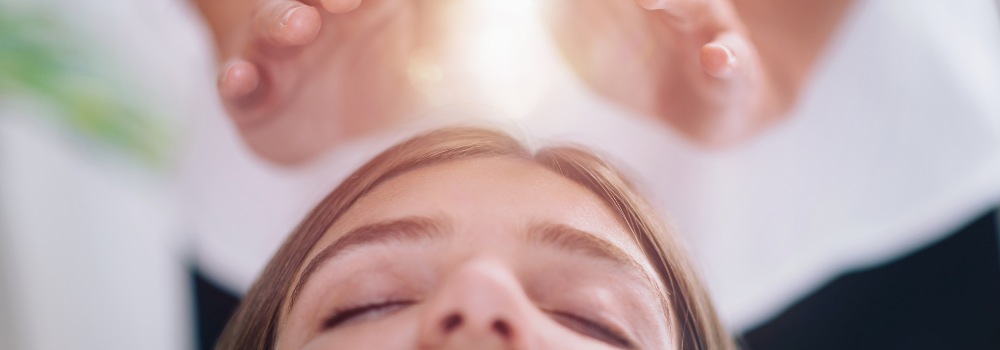
Reiki sessions for grief, burnout, and major life transitions in London work differently depending on what you’re carrying in — what actually happens, condition by condition. Reiki for Grief, Burnout, and Life Transitions in London — What a Session Actually Addresses This is Part 2 of a two-part guide to what a Reiki session actually addresses, condition by condition. Part 1 covers the evidence on Reiki and anxiety, plus what a session for anxiety and overwhelm looks like: read it here — Reiki for Anxiety and Overwhelm in London. This part covers grief, burnout, and life transitions, and what happens when a session goes further than expected. Grief Grief behaves differently, and treating it like anxiety in a session misses the point of the work. Grief that hasn’t been let through often doesn’t present as sadness at first — it can show up as tightness in the chest, a held breath, or a strange flatness that the client can’t quite name. A session doesn’t try to move grief along faster than it’s ready to move. It creates enough safety and stillness that whatever has been held gets permission to surface — which is why grief sessions are the ones most likely to produce sudden, unplanned emotional release: tears that weren’t expected, a wave that passes through and then genuinely clears. This is not a malfunction of the session. It’s usually the point. A practitioner who has sat with this regularly recognises the difference between release and distress, and knows when to hold space and when to slow down — which is a skill built by repetition with real grief, not by training level alone. Burnout and Emotional Numbness Burnout is the condition most often misdiagnosed as needing the same approach as anxiety, and it’s usually the opposite. Where anxiety is a nervous system stuck in “on,” burnout is frequently a nervous system that has gone quiet from overuse — flat, low-charge, disconnected from sensation rather than flooded by it. A session for burnout tends to work more slowly and with less intensity at the start, because the goal isn’t to calm an activated system but to gently bring feeling back into one that’s gone numb from sustained overextension. Clients in this state often describe the most meaningful part of the session as simply noticing something again — hunger, tiredness, a specific emotion — rather than a dramatic release. Burnout sessions are also the ones where a single visit is least likely to be enough on its own; the nervous system depletion that produces burnout usually didn’t happen in a week, and it doesn’t fully resolve in one. Life Transition and Disconnection This category — divorce, career change, a major move, the end of a long chapter — doesn’t map neatly onto anxiety or grief, though it can contain elements of both. What’s distinct here is a client who is often not distressed in an obvious way but reports feeling ungrounded, unclear, or disconnected from a sense of direction. Sessions for this tend to focus less on calming a specific symptom and more on creating clarity — space where the next right step becomes more legible, even if nothing about the external situation has changed yet. One Shin Healing client, receiving a distant Reiki session during a period of uncertainty, described consistent warm sensations over the heart throughout the session, followed by a distinct sense of emotional clarity in the days afterward. This is the presentation where clients most often describe the outcome in cognitive terms rather than physical ones: less “I feel calmer” and more “I know what I need to do now.” When It Goes Further Than Expected Occasionally, in any of the above, a session produces something more intense than relaxation — visible shaking, a strong and unexpected emotional surge, or a client who goes still enough to seem briefly somewhere else entirely. This isn’t unique to any one condition; it happens when the body has been holding something for long enough that safety alone is enough to let it go. What matters at that point isn’t the client’s readiness — it’s whether the practitioner has actually sat with this before and has a steady, specific response rather than a reassuring one. Years of regularly sitting with clients through exactly this kind of response is what builds that steadiness — a different kind of readiness than a weekend qualification provides, and it’s worth asking any practitioner directly what they do when a session goes further than expected. A confident, specific answer is the tell. What Reiki Doesn’t Do It doesn’t replace treatment for a diagnosed anxiety disorder, and it isn’t evidenced for conditions like psychosis or severe depression — the research base simply doesn’t extend there, and no honest practitioner should imply otherwise. It’s also not a single-session fix for anything chronic; the evidence supports it as a complementary practice that reduces symptom load, not a cure that resolves the underlying condition. If what you’re carrying feels acute, unmanageable, or unsafe, a Reiki session is a reasonable addition to care from a GP or therapist — not a substitute for booking one. What This Looks Like at Shin Healing Julia Shin-Yan Tsang holds the full three-level Usui Reiki system, trained across three teachers — Reiki Maya London, Jacqualine Hannah, and Teresa S. Brown-Okunniwa. Sessions begin with a consultation and energetic assessment, so the approach reflects which of the above you’re actually bringing in, rather than a single fixed protocol applied to everyone. Acute grief or major transition usually calls for a short intensive period followed by a lighter maintenance schedule. In-person sessions run from Hammersmith, London W6; distant Reiki is available any day by arrangement. To book or ask which approach fits your situation: shinhealing.com
Reiki for Anxiety & Overwhelm in London
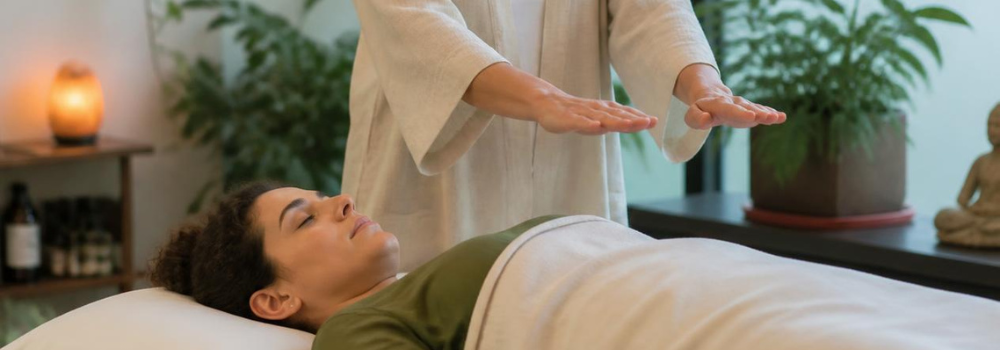
Reiki for anxiety in London shows a moderate-to-large reduction in symptoms per a 2024 meta-analysis of 824 people — but what a session addresses differs by condition. Reiki for Anxiety and Overwhelm in London — What a Session Actually Addresses Every Reiki practice in London says the same four words: “restores emotional balance.” Ask what that means for someone having a panic spiral at 2am, versus someone six months into grief they haven’t let themselves feel yet, versus someone who hasn’t felt much of anything in a year because they’re burnt past the point of noticing — and the answer is usually silence, or the same paragraph with a different adjective swapped in. “Emotional balance” has become a category, not a description. It tells you nothing about what will actually happen in the room. It also obscures something worth knowing plainly: the evidence on Reiki and anxiety is more specific than most people claim, in both directions. Here’s what it actually says, and what a session does differently depending on what you’re bringing into it. This is Part 1 of a two-part guide — it covers anxiety and overwhelm; grief, burnout, and life transitions are covered in Part 2. What the Evidence Actually Says A 2024 meta-analysis published in PubMed, drawing on 824 participants across multiple studies, found that people who received Reiki saw a moderate-to-large reduction in anxiety compared with those who didn’t — a difference large enough that it’s very unlikely to be down to chance (technically, a standardised mean difference of −0.82, p = 0.001). A 2022 systematic review in Frontiers in Psychology separately rated the evidence for Reiki’s effect on anxiety as moderate-to-high quality against placebo, using GRADE criteria — the same framework used to assess evidence for conventional medical interventions. Both reviews found the effect held for general anxiety and was especially consistent for what researchers call procedural or health-related anxiety: the kind tied to a specific event, diagnosis, or treatment, rather than a chronic underlying condition. That’s the honest upside. The honest limit sits right next to it: most of the 140-plus published Reiki studies are small pilot trials, many without adequate control groups, and true blinding is close to impossible in energy work — the practitioner and often the client know what’s being delivered. That doesn’t erase the finding. It means the finding is real but not definitive, which is a different claim from “no evidence exists” — the line most Reiki sites either avoid or overstate in the opposite direction. What none of this evidence tells you is what a session should look like for your specific situation. That part depends on what you’re actually carrying in. Reiki for Anxiety and Overwhelm in London This is the condition the research speaks to most directly, and it’s also where a session is most predictable in shape. Anxiety tends to sit in the nervous system as activation — a body that hasn’t been told it’s safe to stop scanning for threat. A session for this doesn’t chase the anxious thought; it works with the physical signature underneath it, typically starting at the head and moving through the body in a way designed to slow the sympathetic response rather than argue with it. Clients most commonly report the shift as physical before it’s mental: the breath deepens on its own, the shoulders drop, and only afterward does the racing-thought quality of the anxiety loosen. This is also the presentation where a single session most reliably produces a noticeable, same-day change — consistent with the “procedural anxiety” pattern in the research, where the target is a specific state rather than a deep-rooted pattern. Continuing in Part 2 Anxiety and overwhelm are one part of the picture. Grief, burnout, and major life transitions each call for a different approach in the room, and treating them like anxiety misses the point of the work. Part 2 covers what a session actually addresses for each of these, plus what happens when a session goes further than expected: read Reiki for Grief, Burnout, and Life Transitions in London. What Reiki Doesn’t Do It doesn’t replace treatment for a diagnosed anxiety disorder, and it isn’t evidenced for conditions like psychosis or severe depression — the research base simply doesn’t extend there, and no honest practitioner should imply otherwise. It’s also not a single-session fix for anything chronic; the evidence supports it as a complementary practice that reduces symptom load, not a cure that resolves the underlying condition. If what you’re carrying feels acute, unmanageable, or unsafe, a Reiki session is a reasonable addition to care from a GP or therapist — not a substitute for booking one. What This Looks Like at Shin Healing Julia Shin-Yan Tsang holds the full three-level Usui Reiki system, trained across three teachers — Reiki Maya London, Jacqualine Hannah, and Teresa S. Brown-Okunniwa. Sessions begin with a consultation and energetic assessment, so the approach reflects which of the above you’re actually bringing in, rather than a single fixed protocol applied to everyone. For general stress or anxiety, one to two sessions monthly is the typical starting cadence. In-person sessions run from Hammersmith, London W6; distant Reiki is available any day by arrangement. To book or ask which approach fits your situation: shinhealing.com
Tuning Fork Reflexology London: Honest Evidence
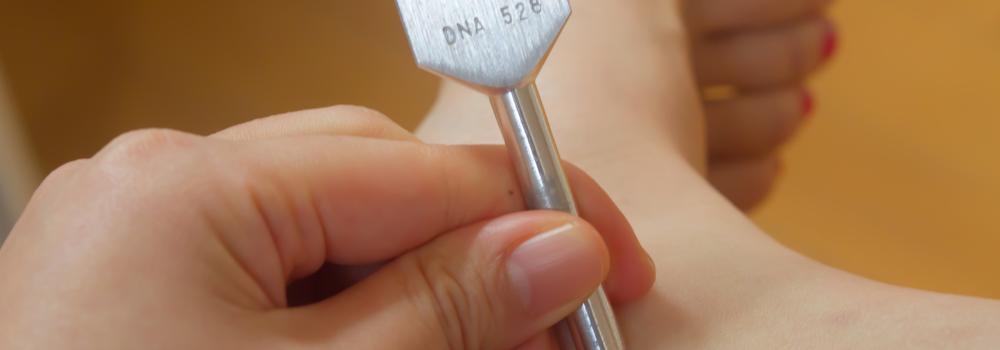
Reflexology’s own evidence base is weak. Tuning fork/vibroacoustic work is better supported. Here’s what that means for a combined session, honestly. Tuning Fork Reflexology in London — What It Is, and an Honest Look at the Evidence for Each Half Tuning fork reflexology is genuinely rare in London — a handful of practitioners nationally offer it as a named, combined service, most reflexologists who use tuning forks at all treat them as a minor add-on rather than a structured part of the session. Before describing what it involves, it’s worth being direct about something most pages offering this treatment don’t say: the two halves of “tuning fork reflexology” don’t have the same evidence behind them, and pretending otherwise doesn’t serve anyone deciding whether to book. What Tuning Fork Reflexology Actually Is Tuning fork reflexology applies chakra-tuned forks directly to reflex points on the feet — the same point map used in standard reflexology, where specific zones are mapped to organs, glands, and nerve pathways throughout the body. Rather than manual pressure alone, a struck tuning fork is placed against these points, and the vibration transmits through the bone structure of the foot — a technique sometimes called osteophonic or bone-conduction application, distinct from simply holding a fork near the skin. The session typically closes with gentle hands-on energy work across the feet for grounding. What the Evidence Actually Supports — And What It Doesn’t Here’s the honest split. Reflexology on its own has a weak evidence base. Systematic reviews of randomised controlled trials have consistently found that the best available clinical evidence does not convincingly demonstrate reflexology as an effective treatment for any specific medical condition — across one well-known review, five trials showed positive effects, twelve found no evidence of effectiveness, and overall trial quality was rated poor. That’s not a fringe opinion; it’s the standard finding across multiple systematic reviews of reflexology’s core therapeutic claims. The tuning fork and vibroacoustic component sits on firmer ground. Vibratory stimulation reliably increases local blood flow, reduces muscular tension, and activates the parasympathetic nervous system — the branch responsible for rest and recovery — and these are well-documented physiological responses in the broader vibroacoustic research literature, not claims specific to reflexology. A 2016 study in the Journal of Evidence-Based Integrative Medicine found that sound meditation using tuning forks and singing bowls significantly reduced tension, anger, fatigue, and depressed mood in participants. A 2015 study in Pain Research and Management found low-frequency sound could reduce chronic pain specifically in fibromyalgia patients. So the honest position is this: the vibrational, nervous-system half of tuning fork reflexology has real, if still developing, physiological grounding. The reflexology point-mapping half — the idea that a specific spot on the foot corresponds to and can treat a specific organ — does not currently have convincing clinical trial support behind it, regardless of how the point is stimulated. A session may well produce real relaxation and real physiological effects through vibration and touch; that’s different from the point-specific organ-correspondence claim being proven, and it’s worth knowing which claim you’re actually getting evidence for. Why Feet, Specifically Bone conduction is more efficient in areas with less soft tissue between the fork and the skeletal structure, which is part of the practical reasoning for applying forks at the feet rather than more heavily muscled areas of the body. The reflex point density on the sole also means a practitioner can move through a structured sequence of contact points in a single session, rather than working a smaller number of broader areas. What This Looks Like at Shin Healing Shin Healing’s Tuning Fork Reflexology session runs 60 minutes at £85, held in Hammersmith, London W6. Chakra-tuned forks are applied directly to reflex points on the feet, followed by gentle hands-on energy work for grounding and stress relief. This is offered as a complementary relaxation and nervous-system-regulation practice — not as a diagnosed treatment for a specific medical condition, and not in place of conventional care for one. To book, or to ask whether this is the right session for what you’re dealing with: shinhealing.com
What Is Immersive Healing? Reiki + Sound Combined
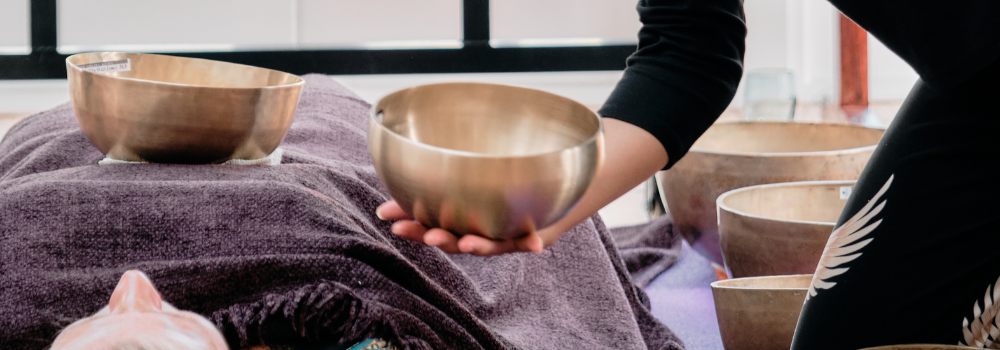
No trial has tested Reiki and sound healing combined — only each alone. Here’s the real theory behind Immersive Healing, and what a session involves. What Is Immersive Healing? Reiki and Sound Healing Combined — and What’s Actually Proven About It Search for Reiki combined with sound healing and you’ll find the same phrase everywhere: powerful alchemy. Two ancient healing arts, brought together, for a deeper, more profound experience. It sounds compelling. It’s also a claim nobody backing it has actually tested. Here’s what’s true: no clinical trial has ever studied a combined Reiki and sound healing session. Not one. Every “Reiki-infused sound bath” description online — the profound synergy, the deeper release, the enhanced results — is inference, not evidence. That doesn’t mean the combination doesn’t work. It means the marketing has gotten ahead of the research, and it’s worth knowing exactly where the line between the two sits before booking a 90-minute session on the strength of a word like “alchemy.” What’s Actually Been Studied — And What Hasn’t Reiki alone has real evidence behind it: a 2024 meta-analysis of 824 participants found a statistically significant reduction in anxiety. Sound healing alone has real evidence too: a 2025 systematic review of 19 clinical studies, nine of them randomized controlled trials, found consistent improvements in anxiety, mood, sleep, and in some cases pain and cognitive function. Both of those are genuine findings, with real citations behind them, covered in depth elsewhere. What doesn’t exist is a study of the two together. Combining them is a reasonable idea, not a demonstrated one. Researchers reviewing this space have been explicit about this: studies on Reiki and studies on sound healing measure different things, in different populations, with different methods — and extrapolating from either one to what happens when you combine them requires real caution, not a marketing tagline. The Actual Theory Behind Combining Them There is a genuine theoretical framework here, and it’s more specific than “powerful alchemy” — it’s just rarely named. Researchers Miles and True proposed that Reiki and sound healing may work through a shared underlying mechanism: vibrational attuning of the body’s biofield. The idea is that both practices, despite using entirely different delivery methods — hands versus instruments — may be nudging the same underlying system toward coherence. If that’s correct, sequencing the two rather than picking one might, in theory, work on the same target through two different channels rather than duplicating the same effect twice. That’s a coherent hypothesis. It is still a hypothesis. Nobody has run the trial that would confirm or rule it out. Anyone offering a combined session — including this one — is operating on informed judgment about how the two modalities might interact, not on a settled finding. What Actually Happens in an Immersive Healing Session At Shin Healing, Immersive Healing is the specific, named protocol built around this open question, not a generic label. A session runs 90 minutes. Reiki is applied first, hands-on, for up to 60 minutes — the rationale being that opening and clearing the energy field before the sound work begins gives the second half of the session more to work with, rather than starting cold. Tibetan singing bowls follow, placed on and around the body, working at the tissue and biofield level once the first layer has already been addressed. The sequencing is deliberate: Reiki first because it’s the gentler, slower entry point; sound second because it’s more intense and benefits from a nervous system that’s already begun to settle. One client, Joe S.C., a Business Intelligence Advisor, described exactly this sequence in a home-visit session: “During the Reiki, the warm and positive energy that Julia emits felt like it was being concentrated on the various parts of the body she worked on. I was so relaxed I may have even drifted off at one point. The sound healing was an experience like none other; the Tibetan singing bowls created deep vibrations that radiated through my body and frequencies that induced euphoric feelings.” The effect, in his account, didn’t stop at the session: “the following day felt light and easy… I also felt less overwhelmed by the tasks that had previously felt insurmountable.” That two-phase account — a settling first half, a more intense second half, and an effect that carried into the next day — is a real, individual data point for what the Miles and True hypothesis would predict, without claiming it proves the mechanism. Who This Is For — Honestly Immersive Healing is the practical answer for two kinds of people: those who don’t want to choose between Reiki and sound healing because their situation doesn’t cleanly call for one over the other, and those who are already familiar with one modality and curious what the other adds. It is not a “stronger” or “more powerful” version of either — that framing, common in competitor marketing, implies a proven multiplier effect that doesn’t currently have evidence behind it. What it is: a considered combination of two independently-evidenced practices, sequenced by a practitioner’s clinical judgment, offered honestly as exactly that. Booking Immersive Healing runs 90 minutes at £155 in-studio, or £250 for a home visit across London, Surrey, and Berkshire. Sessions are held at Hammersmith, London W6, with Julia Shin-Yan Tsang — a Usui Reiki Master Teacher and CMA-accredited sound therapist trained at source in Nepal and Bali, UK. Allow up to two hours in total. To book, or to ask whether this is the right starting point for your situation: [shinhealing.com]
Crystal Singing Bowls vs Tibetan Singing Bowls | Shin Healing
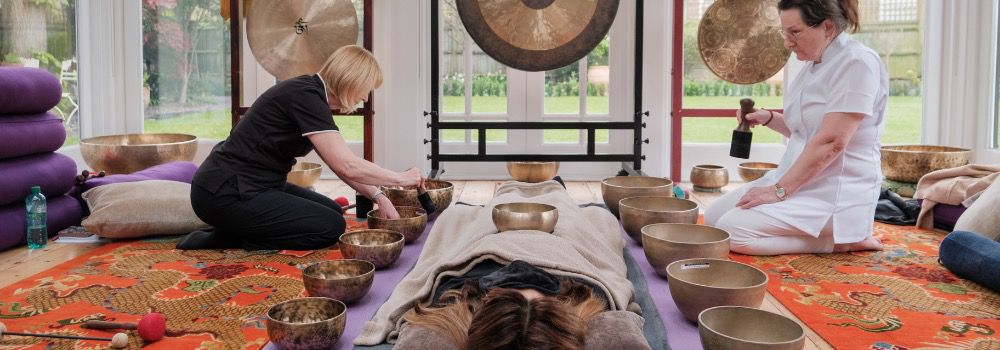
Crystal singing bowls vs Tibetan singing bowls: what each does, which singing bowls to buy, and the alchemy crystal bowl category most comparisons miss. Crystal Singing Bowls vs Tibetan Singing Bowls — What Each One Actually Does When comparing crystal singing bowls vs Tibetan singing bowls, most people have already been told the answer is “it depends.” That answer is not wrong. It is also not useful. What actually helps is understanding what each instrument does that the other cannot, because then the question answers itself. This guide covers three instruments, not two. Most comparisons miss the third category entirely. That omission matters, because it is the one that changes what a serious practitioner reaches for when the work needs to go deepest. At a glance Feature Tibetan (Himalayan) Bowls Standard Crystal Bowls Alchemy Crystal Bowls Material Multi-metal alloy, hand-hammered 99.9% pure quartz, moulded 99.99% pure American quartz, individually hand-finished Acoustic profile Complex layered overtones (4–18 simultaneous frequencies) Single, clear, penetrating tone Pure, sustained tone with internal slow pulsation Physical use Placed directly on the body Played in surrounding space; chalice variants can be held and moved Played in surrounding space Primary effect Grounding, physical tissue release Expansive, mental clarity Auric field and energetic integration Best suited for Pain, nervous system dysregulation, physical tension Chakra work, meditation, expansion Advanced energetic and spiritual activation Tibetan singing bowls Tibetan singing bowls — also called Himalayan metal bowls — are made from a multi-metal alloy, hand-hammered by artisans in Nepal into a shape that is unique in weight, wall thickness, and proportion. That hand-hammering process is what defines how they behave acoustically: rather than a single clean note, each bowl produces a complex stack of simultaneous frequencies — anywhere from four to eighteen overtones layered together. Those layered frequencies interact with each other to produce a natural beat — a pulsation within the sound itself — that falls within the delta and alpha brainwave range. A well-played Himalayan bowl creates the acoustic conditions in which the nervous system slows, not because it is instructed to, but because the sound makes it the path of least resistance. The effect is grounding, physical, and cumulative across a session. There is one practical property Tibetan bowls have that crystal bowls do not: they can be placed directly on the body. The physical weight and vibration transfer through tissue — targeting back tension, muscular holding, and areas of stagnation in a way that ambient sound cannot reach. This is why trained sound therapists working with physical pain, nervous system dysregulation, or post-illness recovery typically anchor their practice in Tibetan bowls first. At Shin Healing, Tibetan bowls are the foundation of the clinical sessions. The 1:1 Tibetan Bowls Sound Healing session opens with an instrumental energy assessment, with specific bowls selected and sequenced to the client’s energetic state. They are also the primary instrument in the Immersive Healing signature session, where their depth carries the body into states where physical release becomes possible. Crystal singing bowls Crystal singing bowls are a modern instrument with an unexpected origin: in the 1980s, the semiconductor industry used high-purity quartz crucibles to grow silicon crystals for computer chips. When these vessels were struck, they produced tones of unusual clarity and sustain. Sound therapy practitioners noticed, and a new instrument category was born. Where Tibetan bowls create complexity, crystal bowls create focus. Tuned to specific notes corresponding to the seven chakras — C through B — they produce a single, penetrating frequency. The sensation is expansive rather than grounding: felt in the upper body, the chest, and the crown, with a quality of opening and lifting rather than settling. Standard crystal bowls are typically played into the space rather than placed on the body — this is also Julia’s approach. Some practitioners work with chalice bowls, which have handles and can be held and moved through the space around a client, giving greater directional control during a session. Shin Healing stocks chalice bowls alongside its full crystal bowl range. Alchemy crystal singing bowls — the category most comparisons miss Standard crystal bowls and Alchemy crystal singing bowls share a quartz base, but they are not the same instrument. The distinction lies in specification and finish. Standard frosted crystal bowls are made from 99.9% pure quartz, moulded into shape. Shin Healing’s Alchemy crystal bowls are made from 99.99% pure American quartz — a higher level of purity — and are individually hand-finished for precision in tone and resonance rather than mass-produced. The difference is audible: the sound is purer, more sustained, and carries a slow, breathing quality — a subtle internal pulsation — that standard frosted crystal bowls simply do not produce. Julia’s own experience with the instrument illustrates where this acoustic quality leads in practice. When playing an Alchemy bowl in a group session, she finds she can release the heavy energy of the room without moving physically close to individual participants — the bowl works at distance, and the collective shift registers across the whole space. That reach — into the auric field rather than the nervous system alone — is what positions Alchemy bowls in a different register from both Tibetan and standard crystal instruments. At Shin Healing, Alchemy crystal bowls are the instrument Julia reaches for when a session moves into advanced energetic integration. The Angelic Activation Healing session — 100 minutes combining Starseed Reiki with Alchemy crystal bowl sound — works at the level of auric field clearing and full seven-chakra balancing. Watch a client’s experience of the session below. Shin Healing also stocks American Quartz Alchemy Crystal Singing Bowls in its instrument shop, hand-finished for precision in tone and resonance, alongside Tibetan and rainbow singing bowls. Crystal vs Tibetan Singing Bowls: Which Should You Buy? The most common question from those new to sound healing is: which singing bowls should I buy? Most clients already have a sense of which instrument they are drawn to — and that instinct is usually worth following. For those who want
What is Starseed Reiki? Training in London | Shin Healing Academy
What is Starseed Reiki? A lineage extension of Usui, founded by Julia Shin-Yan Tsang, with in-person Starseed Reiki training in London through Shin Healing Academy. What is Starseed Reiki — and How It Differs from Traditional Usui Practice What is Starseed Reiki? If you are searching for this, the desire behind the question is real — a connection to something beyond the purely physical, a healing path that works with the soul’s origin rather than only the immediate body. What is harder to find online is that intention grounded in anything structured: a named lineage, a credentialled founder, a verifiable training pathway. Most of what currently exists under this term is loosely named content — healing centres, distance attunements, and cosmic energy material with no traceable foundation behind it. This article is specifically about a different thing: Starseed Reiki as a distinct lineage extension, developed by Usui Reiki Master Teacher Julia Shin-Yan Tsang, and offered as a formal training pathway through Shin Healing Academy. The foundation: Usui Reiki Usui Reiki — formally the Usui System of Natural Healing — was developed by Mikao Usui in Japan following a 21-day meditation retreat on Mount Kurama in 1922. During that retreat, Usui experienced what he described as a direct transmission of healing energy, which he went on to systematise and teach. The Usui system works on the principle that universal life energy — called ki in Japanese — flows through the body. A practitioner, once attuned by a Reiki Master, can channel this energy through their hands to support balance across the physical, emotional, mental, and spiritual levels. Attunement — the formal transmission between teacher and student — is what makes Reiki a lineage rather than a technique. You cannot read your way into it. Usui Reiki has four practitioner levels: Level 1, Level 2, Master, and Master Teacher. The lineage matters because it traces directly back to Usui himself, through named teachers. Julia Shin-Yan Tsang trained under three Reiki teachers before reaching Master Teacher level: Reiki Maya London (Level 1 & 2, 2020), Jacqualine Hannah in London (Usui System Master Level, 2022), and Teresa S. Brown-Okunniwa (Master Teacher Level, 2025). She is a member of the Reiki Association, listed at reikiassociation.net. What Starseed Reiki adds Starseed Reiki is an extension of the Usui system — not a replacement for it. Where Usui Reiki works with universal life energy as a healing and balancing force, Starseed Reiki is oriented specifically toward the soul’s cosmic origin. The soul is eternal. While our physical bodies change across lifetimes, the soul has been present through many incarnations on Earth — and for many of us, the journey began far beyond this planet. Many souls originated in other galaxies — Sirius and Andromeda among the most recognised — and carry the frequency of that origin within them regardless of how many lives have passed. Starseed Reiki works with exactly this layer: channelling the light of the soul’s original home, across whatever distance exists between here and there. It supports healing, alignment, and the integration of higher frequencies into daily life — not by adding something foreign, but by reconnecting to what is already there. To explore the different types of Starseed and understand which resonates with you, visit starseed-reiki.org/what-types-of-starseed/. Who developed Starseed Reiki, and why Starseed Reiki was developed by Julia Shin-Yan Tsang, founder of Shin Healing and Shin Healing Academy in London. Julia is originally from Hong Kong, trained across Nepal, Bali, and the UK, and has worked with Tibetan singing bowls and Reiki for over a decade. The lineage emerged from Julia’s own practice — a gift, as she describes it, from the light spirit. Years of deep session work had brought her into consistent contact with an energetic layer that the Usui system alone did not fully name. Rather than keeping this as an internal framework, she formalised it as a lineage and built a dedicated site to hold it: starseed-reiki.org. Julia herself is an Andromedan Starseed — carrying a connection to the Andromeda galaxy — and this shapes the way she works. For clients and students who are also starseeds, that connection creates a recognition that is difficult to explain but immediately felt. It is worth addressing the obvious question: if lineage depth and ancient transmission are the hallmarks of serious practice — and they are — what gives a contemporary practitioner the authority to found one? The answer is the same logic that applies to Usui himself: all lineages were new at some point, and what confers authority is not age but the rigour of the training behind the practitioner. Julia trained under three Reiki teachers across five years before reaching Master Teacher level. That credential trail is what gives her the standing to extend the system — not to replace or rival Usui, but to name and formalise a dimension of practice she encountered through years of deep work within it. How to access Starseed Reiki training Starseed Reiki training in London is available through Julia’s 1:1 Usui Reiki programme at Shin Healing Academy, where it forms Phase 4 of a complete journey — Mastery & Attunement. Students who train with Julia from beginner through to Master Teacher level receive both the full Usui Reiki lineage and the Starseed Reiki lineage and attunement within the same training, at no additional cost. The training is in-person, in Hammersmith, London. There is no fixed timeline — students move at their own pace with mentorship throughout. Frequently asked questions Do I need to complete Usui Reiki training before accessing Starseed Reiki? Yes. Starseed Reiki is built on the Usui foundation — you need to be attuned through the Usui levels first. Julia’s 1:1 training takes you from beginner through to Usui Master Teacher before the Starseed Reiki attunement. What does a Starseed Reiki attunement involve? It is a transmission from teacher to student — a formal energetic initiation that opens the channel for this lineage, delivered by Julia as Phase 4 of
Best Reiki Healer London: How to Choose | Shin Healing

Looking for the best Reiki healer in London? No licensing body exists — lineage and training level decide what a session can hold — here’s how to tell who can. How to Find the Best Reiki Healer in London — What to Actually Look For Finding the best Reiki healer in London is harder than it sounds — there are hundreds, and almost no way to tell them apart from the outside. Reiki in the UK is unregulated: there is no licensing body, no minimum training standard, and no authority that can stop anyone from calling themselves a Reiki healer. Someone who finished a one-day Level 1 course last month and a Reiki Master who trained across several teachers over five years sit side by side in the same directories, with the same star ratings. That matters more than it sounds, because in Reiki where a session can go depends almost entirely on the practitioner holding it. Most sessions are calm and deeply restful. Sometimes an emotion surfaces and moves through; occasionally the body responds more noticeably as long-held tension lets go. None of that is unusual — it is a sign the work has reached a real layer. The question is whether the person in the room has the training and the steadiness to stay with whatever arises. This is a practitioner’s honest guide to telling who can. What lineage actually means Reiki is passed down through a documented chain of initiations — attunements transmitted directly from teacher to student. A valid Usui Reiki lineage can be traced, without breaks, back to the practice’s founder, Mikao Usui, who developed the system in Japan in 1922. When a practitioner cannot account for every teacher between themselves and Usui, the transmission is considered incomplete. The lineage carries the integrity of what has been handed down — the refinements and the lived understanding of how energy moves and what to do when it behaves unexpectedly. It is also worth knowing that most London practitioners trained with a single teacher. A practitioner who trained with more than one teacher at the same level has had their understanding tested against different transmissions, which tends to sharpen their work in ways a single training does not. When you enquire, ask directly: can you share your Reiki lineage? A trained practitioner will name their teachers and trace the chain. Vague language about “energy work” or “various training” is worth approaching with caution. The three levels of Usui Reiki Usui Reiki training moves through three levels, and they are not interchangeable. Each one changes what a practitioner is equipped to do. Level 1 (Shoden) The foundation. The practitioner learns to channel Reiki energy through their hands, primarily for self-healing. Grounding and genuinely restorative, but focused on the practitioner’s own practice rather than complex work on others. Level 2 (Okuden) Introduces three Reiki symbols. At this level a practitioner can work on other people — including at a distance — and begin addressing mental and emotional patterns rather than surface tension alone. Level 3 / Master Teacher Adds two further symbols and the ability to attune and teach others. In practice, Level 3 practitioners are those who have learned to work with energy with real confidence and experience — who understand how the energy behaves and how to respond to it. The depth a session can reach is shaped by what the practitioner can hold, not only by what the client is ready for. A client capable of going deep can be quietly stopped short by a practitioner without the experience to stay steady there — and no directory will ever surface that gap. Precision, not just presence There is one more distinction that separates practitioners who do real work from those who are simply certified: whether they assess before they act. A practitioner working at depth does not just run through hand positions and hope the energy lands where it is needed. They read the client’s energetic state first and structure the session around it. At Shin Healing, Julia Shin-Yan Tsang does this with her hands — sensing where the field pulls more strongly, which tells her where healing is needed. The head is a common site of congestion for people under stress. She scans again partway through to track what has shifted. Ask a practitioner what their pre-session process looks like. Someone who can describe their own method specifically is showing you something a certificate cannot. The questions to ask before booking Once the basics check out, these questions tell you most of what you need to know: What Reiki level are you trained to, and who did you train with? Can you trace your full Reiki lineage back to Mikao Usui? How many teachers did you train with to reach that level? What happens in a session if something intense comes up? What does your pre-session assessment look like? Do you work with particular conditions or types of client? The honest limit Credentials tell you what someone learned. They do not tell you how much of it they have integrated, how regularly they practise on themselves, or whether their own energy field is in the kind of order that makes them a clean channel for someone else. The credential check is necessary, but it is not sufficient. Once you have confirmed the lineage, the level, and the training, you are still listening for something that cannot be certificated: a practitioner who has done the inner work consistently enough that sitting with them simply feels different from the first moment. Clients often describe it as an immediate settling. Trust that signal — it is the part of the evaluation the credentials cannot cover. The Best Reiki Healer in London: What to Expect at Shin Healing Julia Shin-Yan Tsang, founder of Shin Healing, holds the full three-level Usui Reiki system, trained across three teachers — Reiki Maya London, Jacqualine Hannah, and Teresa Brown-Okunniwa — with an unbroken lineage traceable to Mikao Usui. She carries out an