
Sound healing doesn’t make you fall asleep.
Instead, it creates an environment where the body and mind can begin to relax.
Many practitioners believe that instruments such as Tibetan singing bowls, gongs and chimes encourage the brain to shift into slower, more relaxed brainwave patterns through a process known as brainwave entrainment. Although research into sound healing continues to evolve, many people report feeling calmer, mentally quieter and physically more relaxed during and after a session.
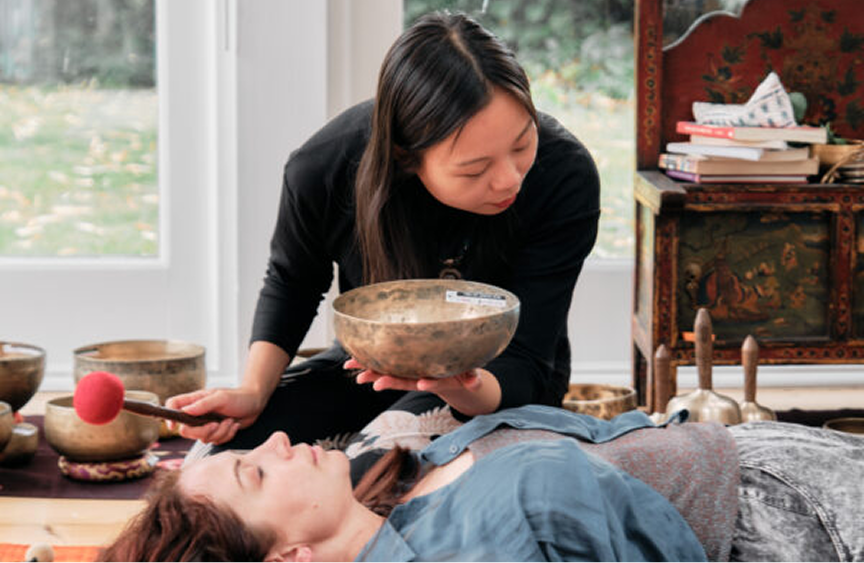
In my own practice, I often observe clients visibly relaxing as the session progresses. Even people who normally struggle with meditation frequently tell me they experience moments of stillness through sound because the harmonious tones give the mind something gentle to focus on.
Can Sound Healing Sometimes Affect Sleep Before It Improves?
Yes.
Although many people sleep better after a session, some clients experience what I describe as a processing or detox phase.
This may include:
- Increased emotional release
- More vivid dreams
- Greater awareness of thoughts
- Temporary overthinking
This isn’t something everyone experiences, but when it does happen, I explain that the body and mind may simply be processing stored stress or emotions.
For many people, this settles over the following days.
My Approach to Sound Healing
I don’t follow exactly the same routine for every client.
Each treatment is adapted to the person’s needs.
For example, if someone presents with excessive overthinking, I may use Tingsha cymbals to help interrupt repetitive mental activity before introducing a Tibetan singing bowl to bring a more grounding and nourishing quality to the session.
Rather than treating a diagnosis, I focus on supporting balance within the whole person.
A Moment That Stayed With Me
One experience I’ll never forget involved a gentleman who had recently been diagnosed with prostate cancer.
After his session, he shared that for a brief moment, his mind had become completely empty.
To many people, that might sound ordinary.
But for someone carrying the emotional weight of a life-changing diagnosis, experiencing even a few moments without fear or constant thinking was incredibly meaningful.
This is one of the reasons I value sound healing so deeply.
Sometimes the greatest gift isn’t solving a problem.
Sometimes it’s simply allowing the mind to rest.
Can You Practise Sound Healing at Home?
Absolutely.
Many of my clients use a singing bowl at home as part of their evening routine.
Even five to ten minutes can be beneficial.
A simple practice might include:
- Playing your singing bowl gently.
- Slowing your breathing.
- Sitting quietly without distractions.
- Repeating an affirmation or intention.
It doesn’t need to be complicated.
The consistency is often more important than the length of the practice.
How Many Sessions Do You Need?
One of the biggest misconceptions about sound healing is that one session should fix everything.
In my experience, meaningful change usually develops gradually.
For clients working towards a specific goal, I generally recommend:
- One session per week for four to five weeks.
- Monthly maintenance sessions afterwards.
This allows your nervous system time to integrate each experience.
Frequently Asked Questions
Does sound healing work for insomnia?
Sound healing may help people experiencing stress-related sleep difficulties by encouraging relaxation. However, persistent insomnia should always be assessed by a healthcare professional, particularly if it continues for several weeks or significantly affects daily life. The NHS provides guidance on insomnia, including common symptoms and treatment approaches for those experiencing ongoing sleep difficulties.
Can I use a singing bowl before bed?
Yes. Many of my clients spend five to ten minutes playing a singing bowl while practising slow breathing or quiet reflection before sleep.
Is one session enough?
Some people notice improvements after one session, while others require several sessions. Every person responds differently.
Final Thoughts
If you’re looking for a natural way to support better sleep, sound healing may be worth exploring.
Rather than forcing the body to sleep, it encourages relaxation, quietens an overactive mind and creates space for your nervous system to reset.
If you’re curious about whether sound healing is right for you, you can learn more about my 1-to-1 sound healing sessions in London, including what to expect during a session and whether a home visit would be suitable for you.